

Campaigns
How conditional outreach sequences work in MAILTIG
The actual next-step rules: children of a step, main-line match triples, the 14-day reply park, and how a human reply jumps the sequence.
By MAILTIG editorial. Reviewed by Product (Product lead (sequence semantics)) on 4 November 2026. Next review due 4 February 2027. 8 minute read.
MAILTIG sequences are ordered steps. Each step has a wait, a channel, and an optional match triple (opened / clicked / replied). Branches are children of a parent step.
How the next step is chosen
After a step finishes, MAILTIG:
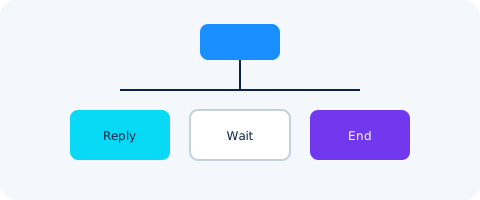
- Looks at children of that step and picks the child whose (open, click, reply) match is the most constrained and still true for that parent message.
- Otherwise takes the next main-line step (no parent) whose own match triple is satisfied.
- If nothing matched, the contact has not replied, and a reply-branch exists, the enrollment parks for 336 hours (14 days) waiting for a reply.
- Otherwise the enrollment completes.
A human reply in the inbox jumps to the reply child or to the next IfReplied main-line step, and skips open tasks.
What this means when you design
- Put the “they replied” path on a child of the email you actually sent, not as a disconnected extra sequence.
- A “no reply” follow-up is a main-line step whose match does not require a reply.
- LinkedIn, SMS, call and WhatsApp steps open a task. Completing or skipping the task is what advances the sequence. MAILTIG does not send those channels.
The interactive exhibit on the campaigns page follows these rules exactly, with sample data.